Wednesday, September 5, 2018

The Pros & Cons of Hormone Replacement Therapy for Primal Women

A Primal woman’s first reaction to the prospect of taking synthetic hormone replacements for menopause? Probably a healthy dose of skepticism. We in the ancestral health community, after all, tend to view pharmaceuticals as a last resort—interventions that are overprescribed by vested interests, create their own set of side effects, and may even do more harm than good. To suggest that we “need” this or that prescription raises our hackles.

Besides, it’s not like menopause is a product of modernity or an aberration our ancestors never experienced; it’s a physiological stage that evolution has protected and selected in humans. It’s perfectly natural. Rather than the debilitating, miserable experience many women report having, menopause should be easier. Graceful, even. But it often isn’t.

And nature unfortunately doesn’t care about that. Menopause is nature’s way of preventing undue discomfort and reducing genetic damage to the group. Your average 50-year-old woman has a lot to offer the tribe in terms of wisdom, child care, and general know-how, but natural selection has also determined that it’s better for everyone if middle-aged women don’t easily get pregnant. Menopause achieves this by down-regulating the hormones and weakening the tissues necessary for conception. The problem is that these same hormones and tissues also figure prominently in a woman’s enjoyment of life and overall health.

What can happen when Mother Nature decides to step in?

  • Anxiety
  • Irritability
  • Loss of libido, vaginal atrophy
  • Night sweats
  • Hot flashes
  • Weight gain
  • Forgetfulness

Longer-term, menopause increases the risk of serious diseases like osteoporosis, heart disease, and breast cancer.

Those aren’t mere inconveniences. They can mar the beauty of what should be an enjoyable part of a woman’s life, interfering with her relationships, her productivity, her cognitive function, her sleep, and her basic ability to enjoy living.

Mother Grok didn’t take pharmaceutical hormone replacements, you might counter. She didn’t hit up the shaman for a compound blend of hormones, so why should you?

First of all, maybe she did. Pre-scientific peoples have been known to develop folk cures that seem primitive but end up getting scientific validation. Think of the medieval garlic-based concoction that we just found out can eliminate medication-resistant staph infections. Or the indigenous Amazonian tribes who somehow figured out if you brewed a certain vine with a certain leaf and drank the finished product you’d visit the spirit world, all without knowing the vine contained DMT and the leaf contained an MAO-inhibitor that made the DMT orally active. Or, to bring it back to menopause, the yam, which cultures have used for hundreds of years for menopause treatment without actually knowing it contains an estrogen mimetic with clinical efficacy.

Second of all, the basic Primal stance on pharmaceutical interventions is that they are useful and suitable when correcting a deficiency, a genetic proclivity, or an evolutionary mismatch—particularly when dietary and lifestyle interventions aren’t cutting it. If they can help us treat a condition that seriously impedes our life or pursuit of health, we should avail ourselves of the fruits of modern science. Hormone replacement therapy may very well qualify.

Philosophical qualms aside—does hormone replacement therapy (HRT) work? What factors play into its effectiveness—and safety?

First, Is It Safe?

This might just be the most contentious topic in medicine.

For decades, HRT was the standard treatment for postmenopausal women. Not only was it given to treat the symptoms of menopause, it was billed as an antidote to many of the chronic diseases that increased in frequency after menopause like breast cancer, osteoporosis, and heart disease. Most of this was based on observational data and small pilot studies. That changed with the Women’s Health Initiative (WHI), a massive series of randomized controlled trials involving tens of thousands of postmenopausal women. Finally, the establishment would get the solid backing they needed to continue prescribing HRT to millions of women for prevention of chronic disease.

Except it didn’t turn out so well. Midway through, they stopped the trial because they weren’t getting the desired results.

There were two different HRT study groups. In one study, women without uteruses either got placebo or estrogen alone. In the other, women with uteruses got a combo of estrogen and progestin (a progesterone analogue) or placebo. The estrogen was Premarin, a conjugated estrogen. The progestin was Prempro, or medroxyprogesterone acetate.

The E/P combo increased the risk of heart disease, breast cancer, pulmonary embolism, and stroke, and reduced the risk of colorectal cancer and fractures (but not enough to offset the increased risks).

The estrogen alone had no effect on heart disease (contrary to their hypotheses), but it did appear to increase the risk of stroke while decreasing the risk of breast cancer and fractures.

Following the publication and wide dissemination of the WHI results, HRT use plummeted among women. Breast cancer cases subsequently dropped by 15-20,000 per year. Hormone replacement therapy developed a bad rap that it has yet to shake.

Is it deserved? Yes and no.

While the WHI results highlight some very real risks associated with HRT, they don’t tell the whole story. There are other variables to consider when deciding on HRT.

How Early You Start Taking HRT Matters

Most of the women in the WHI study began HRT when they were very post-menopause: older, in their 60s and upward. They got worse results.

A much smaller proportion of the women in the study were under 60 when they started HRT. They had better results. In fact, among those women who initiated HRT before age 60, total mortality actually dropped by 30%.

Another analysis of the Women’s Health Initiative data found that women who started taking HRT during early pre-menopause were less likely to see the negative effects, like increased breast cancer and heart disease.

Another study found that older post-menopausal women taking estrogen took hits to their working memory that remained after therapy cessation, while younger post-menopausal women had no such reaction.

Women who took oral estradiol 6 years after menopause saw their subclinical atherosclerosis slow down. Those who took it later (10 years after) did not.

A recent large Cochrane meta-analysis found that while in general postmenopausal women taking HRT had a moderately increased risk of heart disease, breast cancer, and other diseases, a subgroup of healthy, 50-59 year old (so, younger) HRT users only had a slightly increased risk of venous thromboembolism.

The longer you wait to initiate HRT after menopause, the more adverse effects occur. Start earlier, if you do start

How You Administer the HRT Matters

Oral hormones have different metabolic fates than transdermal hormones. When you swallow a hormone, it goes to the liver for processing. This creates various metabolites with different bioactivity. One example is oral estrogen. When you take estrogen orally, you raise CRP, a marker of inflammation. Transdermal estrogen has no effect on CRP.

Oral HRT has been shown across multiple studies to increase the risk of venous thromboembolism, while transdermal HRT does not. This is because oral HRT increases thrombin generation and clotting, while transdermal HRT does not.

In the Women’s Health Initiative that found negative effects, the HRT given to the subjects was oral. Perhaps this was the issue.

For local vaginal symptoms, local application is probably ideal, while oral application is suboptimal. In one study, vaginal estriol was far more bioactive than oral estriol, despite the latter resulting in higher serum levels of the hormone.

However, topical isn’t always best. In one study, sublingual users of bioidentical hormones saw relief from night sweats, irritability, hot flashes, anxiety, emotional lability, sleep, libido, fatigue, and memory loss, while topical users only saw relief from night sweats, emotional lability, and irritability.

The Type Of Hormone You Take Matters

Another factor the WHI failed to address was the composition of the medication itself. They used synthetic hormones—conjugated estradiol and medroxyprogesterone acetate. Could bioidentical hormones, exact replicas of endogenous hormones which exploded in popularity following the WHI, have a different effect?

The amount of research into conventional HRT dwarfs bioidentical hormone therapy (BHT) research, but what we have looks pretty compelling.

Breast cancer is a major concern for HRT users. Most breast cancers respond to estrogen, just over half respond to progesterone, and traditional HRT seems to increase their risk. Yet, at least in healthy postmenopausal women, a combination percutaneous estradiol gel (inserted into the skin) and oral micronized progesterone—both bioidentical to their endogenous counterparts—had no effect on epithelial proliferation of the breast tissue, while reducing activity of a protein that protects cancer from cell death. The conventional HRT had the opposite effect, increasing epithelial proliferation and breast volume (a risk factor for breast cancer). This wasn’t about cancer, but it’s suggestive.

In another study, postmenopausal women on BHT (which included estriol, estradiol, progesterone, testosterone, and DHEA) saw improvements across all measured cardiovascular, inflammatory, immune, and glucoregulatory biomarkers despite being exposed to high levels of life stress.

Then again, in a recent study, bioidentical hormones performed poorly compared to the pharmaceuticals equine estrogen and medroxyprogesterone acetate. The pharmaceutical hormones resulted in a lower risk of breast cancer, although the bioidentical hormones still reduced the risk compared to placebo.

Which Hormones You Take Matters

The vast majority of postmenopausal women take estrogen, progesterone, or some combination of the two. But there’s another hormone that, despite plummeting during menopause, gets ignored—testosterone.

Although testosterone is the “male hormone,” it also plays a vital role in female physiology, especially sexual function. Menopause reduces testosterone by about half, and studies indicate that topical testosterone replacement therapy can improve sexual function and desire (combined with estrogen) as well as musculoskeletal health and cognitive performance in postmenopausal women. More importantly, topical testosterone improves sexual function without causing any of the adverse effects commonly associated with testosterone usage in women, like hair loss, voice deepening, body hair growth, facial hair growth, breast pain or tenderness, or headaches.

Adding low-dose testosterone to a low-dose estrogen regimen may even be better at reducing somatic symptoms of menopause (sleep disturbances, hot flashes, and other physical symptoms) than a higher dose of estrogen alone.

Your Expectations Matter

Our big mistake was treating HRT as a panacea for the chronic conditions of aging. It’s not that smart hormone replacement can’t or won’t reduce the risk of certain diseases, like osteoporosis or heart disease. It’s that we’re still figuring it out.

A better, safer move is to focus on what we know HRT can treat: the symptoms of menopause.

Want to reduce hot flashes and get more sleep? HRT works.

Want to reduce anxiety? HRT works.

Want to improve cognitive function and your sense of smell? HRT works.

The use of bioidentical hormones may be safer or more effective against the bigger stuff. It remains to be seen. Until then, treat symptoms, not chronic disease—but keep in mind your overall risks and discern whether treating the symptoms is worth any additional risk for that bigger stuff.

Your Personal Context Matters

Women with a history of estrogen-responsive breast cancer (80% of breast cancers) should exhibit caution and check with their oncologist before taking any kind of HRT.

ApoE4 carriers should seriously look into taking HRT. In one recent study, postmenopausal ApoE4 carriers exhibited rapid cellular aging—except if they were taking HRT.

Whatever You Decide…

Don’t feel guilty if you decide to take some form of it. I myself take a small dose of testosterone to get my levels up to where they should be. My wife, Carrie, has taken bioidentical hormones in the past (a modest compound blend of estrogen, progesterone, and testosterone) to deal with the symptoms of menopause, including persistent brain fog that didn’t respond to any other herbal or alternative measure in her case. There’s no shame. This is restoration of what’s healthy and supportive of a good life. 

Heck, I know women who are both aware of the potential long term risks—heart disease, breast cancer, and the like—and enthusiastic about the shorter-term, more immediate quality-of-life benefits they currently enjoy. They prefer the definite benefits over the small and uncertain absolute risk increases. Some have even said that feeling better day-to-day gives them the energy to continue living a healthy life in other ways.

I also know women who do the opposite, who either are lucky enough to not experience any profound symptoms in their transition or who prefer to use other methods and interventions to deal with their symptoms in order to avoid any increased long-term complications. (I’ll delve more into this in the future if there’s interest.) Regardless, it’s all a choice.

Hopefully after today you feel better equipped to make an informed one.

What about you, folks? I know I have thousands of readers who are facing this very question—or who have already faced it. What did you choose? How did you handle the HRT question?

Thanks for reading. Take care!

References:

Wu WH, Liu LY, Chung CJ, Jou HJ, Wang TA. Estrogenic effect of yam ingestion in healthy postmenopausal women. J Am Coll Nutr. 2005;24(4):235-43.

Murkes D, Lalitkumar PG, Leifland K, Lundström E, Söderqvist G. Percutaneous estradiol/oral micronized progesterone has less-adverse effects and different gene regulations than oral conjugated equine estrogens/medroxyprogesterone acetate in the breasts of healthy women in vivo. Gynecol Endocrinol. 2012;28 Suppl 2:12-5.

Ruiz AD, Daniels KR. The effectiveness of sublingual and topical compounded bioidentical hormone replacement therapy in postmenopausal women: an observational cohort study. Int J Pharm Compd. 2014;18(1):70-7.

Stephenson K, Neuenschwander PF, Kurdowska AK. The effects of compounded bioidentical transdermal hormone therapy on hemostatic, inflammatory, immune factors; cardiovascular biomarkers; quality-of-life measures; and health outcomes in perimenopausal and postmenopausal women. Int J Pharm Compd. 2013;17(1):74-85.

Zeng Z, Jiang X, Li X, Wells A, Luo Y, Neapolitan R. Conjugated equine estrogen and medroxyprogesterone acetate are associated with decreased risk of breast cancer relative to bioidentical hormone therapy and controls. PLoS ONE. 2018;13(5):e0197064.

Schiff I, Tulchinsky D, Ryan KJ, Kadner S, Levitz M. Plasma estriol and its conjugates following oral and vaginal administration of estriol to postmenopausal women: correlations with gonadotropin levels. Am J Obstet Gynecol. 1980;138(8):1137-41.

Scarabin PY. Hormone therapy and venous thromboembolism among postmenopausal women. Front Horm Res. 2014;43:21-32.

Espeland MA, Rapp SR, Manson JE, et al. Long-term Effects on Cognitive Trajectories of Postmenopausal Hormone Therapy in Two Age Groups. J Gerontol A Biol Sci Med Sci. 2017;72(6):838-845.

Hodis HN, Mack WJ, Henderson VW, et al. Vascular Effects of Early versus Late Postmenopausal Treatment with Estradiol. N Engl J Med. 2016;374(13):1221-31.

Santoro N, Allshouse A, Neal-perry G, et al. Longitudinal changes in menopausal symptoms comparing women randomized to low-dose oral conjugated estrogens or transdermal estradiol plus micronized progesterone versus placebo: the Kronos Early Estrogen Prevention Study. Menopause. 2017;24(3):238-246.

Yazici K, Pata O, Yazici A, Akta? A, Tot S, Kanik A. [The effects of hormone replacement therapy in menopause on symptoms of anxiety and depression]. Turk Psikiyatri Derg. 2003;14(2):101-5.

Doty RL, Tourbier I, Ng V, et al. Influences of hormone replacement therapy on olfactory and cognitive function in postmenopausal women. Neurobiol Aging. 2015;36(6):2053-9.

Jacobs EG, Kroenke C, Lin J, et al. Accelerated cell aging in female APOE-?4 carriers: implications for hormone therapy use. PLoS ONE. 2013;8(2):e54713.

Kingsberg S. Testosterone treatment for hypoactive sexual desire disorder in postmenopausal women. J Sex Med. 2007;4 Suppl 3:227-34.

Davis SR, Wahlin-jacobsen S. Testosterone in women–the clinical significance. Lancet Diabetes Endocrinol. 2015;3(12):980-92.

Achilli C, Pundir J, Ramanathan P, Sabatini L, Hamoda H, Panay N. Efficacy and safety of transdermal testosterone in postmenopausal women with hypoactive sexual desire disorder: a systematic review and meta-analysis. Fertil Steril. 2017;107(2):475-482.e15.

Simon J, Klaiber E, Wiita B, Bowen A, Yang HM. Differential effects of estrogen-androgen and estrogen-only therapy on vasomotor symptoms, gonadotropin secretion, and endogenous androgen bioavailability in postmenopausal women. Menopause. 1999;6(2):138-46.

The post The Pros & Cons of Hormone Replacement Therapy for Primal Women appeared first on Mark's Daily Apple.


from Mark's Daily Apple https://ift.tt/2wUgzF5

The Bobby Brown Story Pt 1 Was Epic & Twitter Had Us on the Floor

Bobby Brown
By Brenda Alexander

From the moment the promo for The Bobby Brown Story dropped that opened with the original Bad Boy of R&B snorting a line of cocaine (seriously BET, y’all couldn’t think of anything else) and featured his classic pelvic thrusting performances, I knew we would get his raw unfiltered truth. We’ve anticipated a biopic for years. He hasn’t had the best reputation with unfairly catching the slack for the dismantling of New Edition, and the deaths of Whitney Houston and Bobbi Kristina. But he’s stayed strong, cleaned himself up after years of addiction, and has reinvented himself as an artist, family and businessman.

Nevertheless, the first of a two-part TV movie didn’t disappoint. I scanned twitter for reactions; and, of course twitter’s commentary surpassed any recap. Here are the top moments that had Twitter losing it:

Continue
Hoes In Different Area Codes
Bobby had women...and babies...in damn near every city. That’s an exaggeration, but he got around. There were threesomes on movie sets and sex after concerts. When he sang humpin’ around he was clearly speaking of personal experience. And where were the condoms?! Obviously absent as by 16, he had his eldest son and two more over a short time frame- one of whom was conceived during his engagement to Whitney. His brother and manager Tommy, tried his best to keep things in line, even going as far as keeping in touch with the mothers of Bobby’s children and sending gifts as if they were from Bobby for birthdays when Bobby forgot. Oh Bobby.


Let Bobby tell it, Ms. Jackson was Nasty
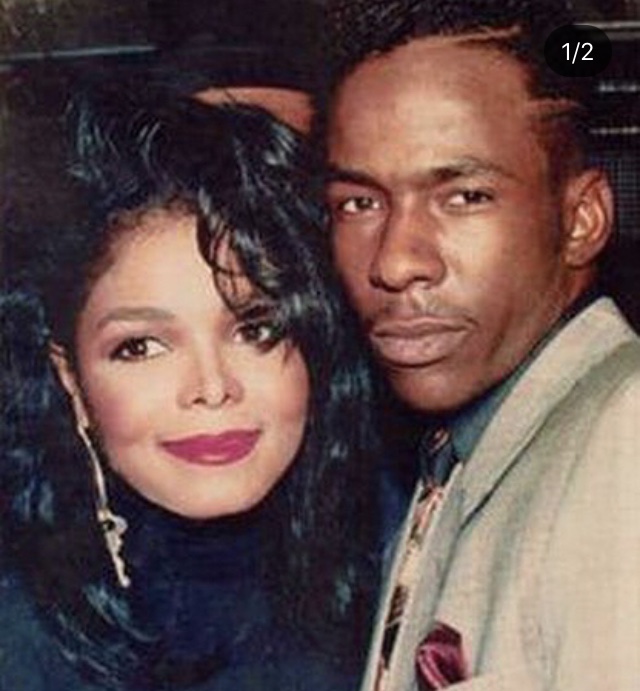
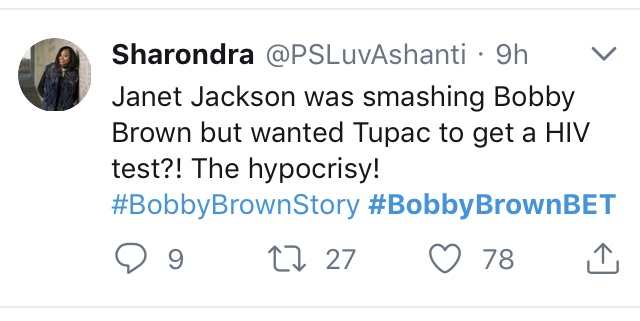
Apparently, Twitter didn’t read his memoir because this caught them off guard. According to Bobby, he and Janet Damita Jo Jackson had a rendezvous, one that included secret hotel sex since Janet was engaged to a DeBarge at the time. His family and friends knew while Janet kept Bobby as a side piece, leaving Bobby to believe she was embarrassed of not just his bad boy image but also his darker complexion. He did a pop up at Janet’s house while her future husband was home and Janet did not take that well, but she arranged for them to hook up elsewhere. Bobby wanted more. The book details a time where he actually kicks her out of a hotel room. That was left out of the movie. Either way, BET has a knack for marketing because the first commercial after that scene featured Janet Jackson accepting an award at the upcoming Black Girl’s Rock Ceremony. Oh, the shade of it all. I’m expecting a lawsuit from the Jackson clan disputing this relationship, and Twitter had the same line of thinking.


He Who Findeth A Good Wife
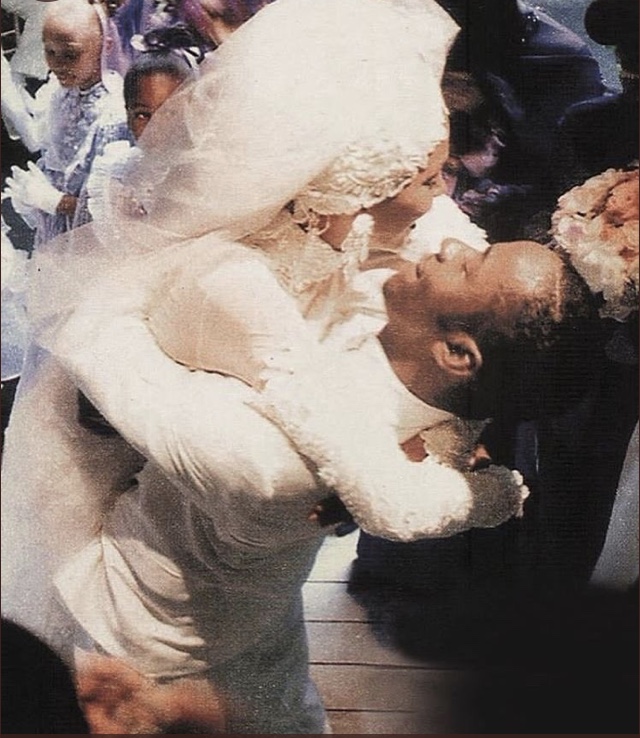
Bobby and Whitney on their wedding day (Photo: Twitter)
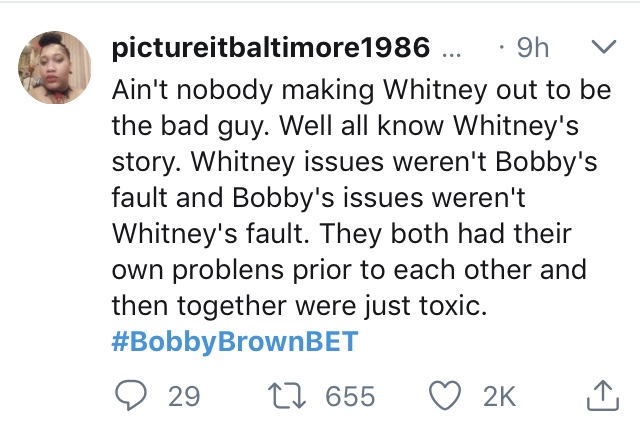
As someone put it on Twitter, Whitney had the best PR Manager of the 80s and early 90s because they kept her image clean with bleach. Whitney was a trip and her and Bobby together were magnetic from the start. One thing for sure, she played no games about her Bobby and unlike Janet, wanted to be open about their relationship from the start. When one of his baby mamas stormed into his dressing room to find him with Whitney and use their kids as a pawn to run Whitney away, Whitney replied with a petty but calm, “You two are blessed with beautiful children.” When she found out the same girl was pregnant, at the same time as she was, she demanded Bobby get a DNA test. He asked why and she hit him with a “Mutha...why wouldn’t she lie.” They balanced each other out but also enabled each other’s flaws. Not to mention, the World was constantly in their business, much to Bobby’s dismay and portrayed him as not being good enough. And when their addictions climaxed, there’s only so much to hold on to.


The Mysterious Case of Robyn Crawford
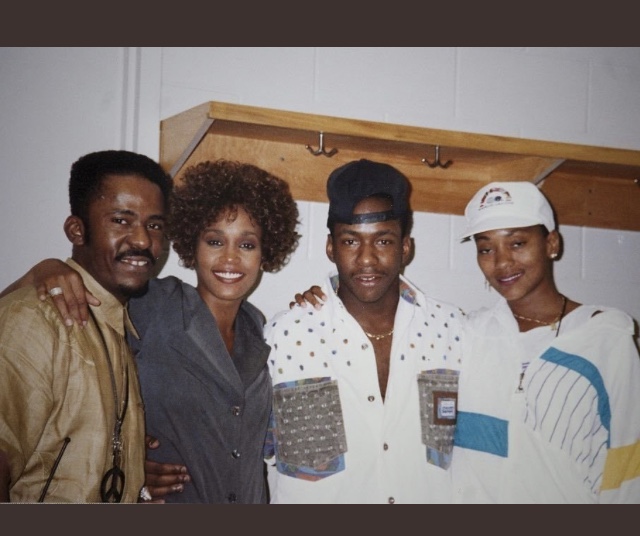
L to R: Tommy Brown, Whitney Houston, Bobby Brown, Robyn Crawford (from Twitter)
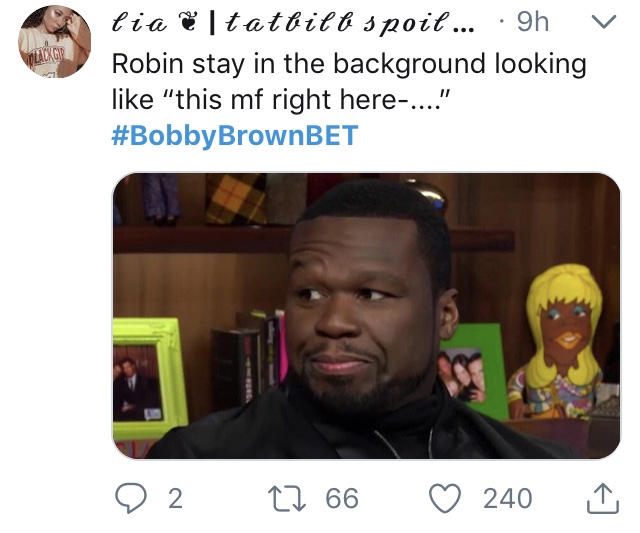
We’ll probably never know what went down between Robyn and Whitney and at this point, it doesn’t matter. What we do know is they were close and she was a constant presence in Whitney’s life during their friendship, one that Bobby wasn’t here for. In her depiction in this movie, Robyn was like a fixture, always around but rarely speaking. She spoke instead through body language and facial expression - both of which showed disgust and somewhat of a jealous demeanor towards Bobby, and he felt it all. During one scene where Bobby confesses to getting another woman pregnant while engaged to Whitney, Robyn sits idle smiling. In their wedding scene during their vows, she’s visibly agitated. In a final blow, she and Bobby have words after she digs her hands in a plate of food Bobby cooked for he and his wife (that was foul). He kicks her out of their home, leaving Robyn to give Whitney an ultimatum (or imply such). If you ask Twitter, Robyn has all the tea but unlike everyone else who has shared their experience with Whitney publicly, she’s kept silent. Either Robyn is that loyal to Whitney or she was paid a hefty settlement and signed a gag order to keep quiet.


Thanks to Twitter for the commentary and digging up old photos. Part II of The Bobby Brown Story airs tonight at 9 on BET. Will you be watching?

*****
Brenda is a Philadelphia native with a love for Marketing, Creative writing, wine and Jesus. Her work has been featured on Mayvenn’s Real Beautiful blog and she is the co-author of the book Christmas 364: Be Merry and Bright Beyond Christmas Night (available for purchase on amazon). Follow her on IG @trulybrenda and trulybrenda.wordpress.com


from Natural Hair Care | Curly Nikki https://ift.tt/2wKQsjA

Successful Co-Parenting Takes Heart: Here's Some Do's and Don'ts

Swizz Beatz, wife Alicia Keys, Ex-wife Mashonda & Kids
By Mwabi Kaira

No one sets out thinking they will raise their kids by co-parenting, but life happens. Will Smith, Jada Pinkett-Smith and Sheree Zampino have been the faces of the co-parenting and blended family for over 2 decades now. More celebrity couples have joined the ranks including Neyo, wife Crystal Smith and mother of his two oldest children Monyetta Shaw, Swizz Beatz, Alicia Keys and ex-wife Mashonda, Martin Lawrence, ex-wife Pat Smith and new husband Emmitt Smith and second ex-wife Shamicka Lawrence to name a few. What these couples have shown us is that co-parenting can be done and doesn’t have to be as difficult as we are sometimes shown.

I watched a video in dismay of a mother refusing to allow the father of their child from taking their child because she wanted to put the child in the car seat. When he said he could put the child in without her assistance she said he couldn’t take the kid. He had visitation and had to make a video showing it as proof. My name is not Iyanla but I could tell from this 5-minute video that this whole exchange had nothing to do with the car seat or the child, but everything to do with unresolved issues between these two parents. The misconception about co-parenting is that it comes easy. It does not. It has to be worked at. There are feelings of disappointment, betrayal, and failure that have to be worked through. Couples that are able to work through these feelings while still keeping their kids first are couples that are successful at co-parenting. Issues arise and grow and cannot be repaired when parents can’t put their feelings aside. If there is anger and resentment then it shows up by not allowing interaction with the children and being very petty about it as evidenced by the car seat couple. Children suffer the most when it is so unnecessary, they did not ask to be here and all they asked for was to be loved.

Statistics show that one in three Americans is now some form of step-parent, stepchild, step sibling or other member of a blended family. This is our new reality. Psychology Today lists some do’s and don’ts for co-parenting. Do’s include open dialogue with the co-parent and being on the same team as far as rules and behavioral guidelines. Kids will always look for loopholes and try to play parents against each other whether they are together or not so parents have to have that united front to combat that. The biggest don’ts from Psychology Today are not speaking negatively about the other parent to the child and not allowing your child to get away with things just because of guilt.
Will Smith, wife Jada, Ex-wife Sharee, her former husband and the Kids
I have been co-parenting for 8 years now and my biggest lesson has been staying true to myself. Will and Jada put a face on something I’ve always known I’d do if ever put in that position. I didn’t allow my core to change because of circumstance. My sons have been my biggest priority since the day they were born and I did not allow divorce to change that. I always made sure to do my part regardless of what was coming from the other side when feelings were still being sorted out. Because we live in different states, I send text messages of grades, calls from teachers, videos of plays on the football field, when they get drivers licences, first jobs, and any and every milestone of importance to their father. I involve him in discipline decisions. We have made sure that we are on the same page on our decision making. Our sons are 17 and almost 19 now and we are nowhere done with parenting, we will be their parents for as long as we are alive. We will just move into this new stage of parenting with them; there’s college, adulthood, relationships, and grandbabies in our future and we will have to navigate these new waters as co-parents.

Both Mashonda Tifrere (ex-wife of Swizz Beatz) and Monyetta Shaw have upcoming books on co-parenting releasing this Fall. Mashonda’s book is called Blend: The Secret to Co-Parenting and Creating a Balanced Family with a foreword from Alicia Keys and will be released on October 2nd. Monyetta Shaw’s book is called Keep It Classy: Co-Parenting Strategies for Unstoppable Moms and Devoted Dads with a foreword by Neyo and will be released this Fall. So you see, co-parenting is very possible if you have willing parties.

Do you co-parent? Did your parents co-parent?

Mwabi Kaira is an African girl navigating her way in an American world.  She is of Zambian and Malawian heritage and moved to the USA in 1993.  Writing has been her passion since she could put a sentence together on the page. Mothering her sons is her pride and joy.  She has been an avid runner since 2013 and has run 10 half marathons and a full marathon.  Keep up with her athttp://africanbeautifulme.blogspot.com


from Natural Hair Care | Curly Nikki https://ift.tt/2Q1y6TD

5 Deep Conditioners Your Curls Will Love

Tuesday, September 4, 2018

Protein Shake Roundup: 15 Keto and Paleo Recipes

Today’s post is served up by the folks at PaleoHacks.com. Thanks to their team for the awesome recipe ideas. Hope you all enjoy!

Get ready to drink your way to health with this nutritious Protein Shake Roundup!

Smoothies and shakes can get a bad rap for spiking your blood sugar—especially ones with artificial sweeteners. But with the addition of protein from a healthy source—like collagen peptides or protein powders—smoothies and shakes can make a great snack or meal replacement.

These guilt-free smoothies and shakes are made only with wholesome ingredients and natural sweeteners—no dairy or processed sugars here! You’ll be surprised at how some of these healthy shakes and smoothies drink just like dessert.

Keep this list handy to help you find top-notch recipes that’ll energize you throughout the day!

#1 Amazing Paleo | Dark Chocolate Smoothie with Collagen Peptides
Yes, even chocolate shakes can be healthy! Banana, cacao powder, nut butter, coconut milk, honey and vanilla combine with two scoops of collagen peptides for one decadently-rich smoothie.

#2 Further Food | Vanilla Chai Collagen Protein Smoothie
Skip the chai tea latte and opt for this blended protein smoothie. It’s spiced with cinnamon, ginger, cardamom and cloves!

#3 KetoDiet Blog | Creamy Keto Cinnamon Smoothie
When it comes to the protein in this creamy smoothie, you’ve got options! Choose from your favorite protein powder or go for a few scoops of collagen, then blend up with coconut milk, coconut oil, cinnamon, and chia seeds for even more protein.


#4 Autoimmune Wellness | Collagen-Berry Green Smoothie
This protein-packed smoothie is the perfect on-the-go meal for those following the autoimmune protocol. It helps balance blood sugar by blending collagen with healthy fat!

#5 Healing Family Eats | Maple Pumpkin Collagen Shake
Channel those fall vibes with this protein shake packed with pumpkin, banana, fresh oranges and cinnamon.

#6 Butter Nutrition | Real Food Protein Shake
This sweet strawberry shake nixes over-processed protein powders in favor of simple sources like collagen and pastured-raised egg yolks.

#7 Cook Eat Paleo | Espresso Protein Shake
This high-protein shake is almost like breakfast in a glass. Espresso or strong coffee blends up with cashew milk, bananas and ice for a creamy treat better than anything you can find at the Starbucks drive-thru.

#8 Wicked Spatula | Brownie Batter Protein Shake
This protein shake is like eating brownie batter off a spoon, but way healthier. Dark cocoa powder adds rich chocolatey flavor while collagen peptides boost its nutritional value.

#9 It’s a Mom’s World | Almond Joy Protein Shake
Get your candy fix with this nourishing chocolate, almond, and coconut-packed protein shake. It’s full of healthy fats to give you some serious staying power.

#10 PaleoHacks | Caramel Protein Smoothie
Dates substitute for rich caramel in this sweet protein smoothie. If you’re looking for a bigger energy boost, try adding maca powder to the mix.

#11 Love and Zest | Coconut Cream Pie Protein Shake
Dessert for breakfast? Yes, please! This shake is dense with coconutty flavor, while protein powder rounds everything out for the perfect meal replacement.

#12 The Kitchen Prep | Samoa Cookie Protein Shake
If you’re a cookie fiend, this protein shake is for you. It’s made with coconut flakes, Paleo caramel, and dairy-free chocolate chips to remind you of your favorite Girl Scout treat!

#13 Appetite for Energy | Raspberry Keto Protein Shake
Raspberries make for a sweet and tangy shake that mixes perfectly with coconut cream, but feel free to use any combination of berries you like!

#14 Low Carb Alpha | Almond Vanilla Protein Shake
This almond vanilla shake is full of staple pantry ingredients, so it’s extra easy to whip up on a dime.

#15 Against All Grain | Chocolate Paleo Protein Shake
Cashew milk makes for an ultra-creamy base to this simple and nourishing recipe chocolate protein shake.

Thanks again to PaleoHacks for their post today. Do you have favorite smoothie recipes? Share them below, and have a great week, everyone.

The post Protein Shake Roundup: 15 Keto and Paleo Recipes appeared first on Mark's Daily Apple.


from Mark's Daily Apple https://ift.tt/2MNlT76

Does Straightening Hair for "Special Occasions" Send Kids the Wrong Message?

Via Aevin Gugas IG      

By Erickka Sy Savané

We love Guinness World Record holder for biggest afro Aevin Dugas. She was one of our Naturally Glam picks and the CurlyNikki community showed her beaucoup love! But not everyone was feeling the love recently when she shared her views about straightening kids' hair for 'special occasions.' Who knows, maybe it was the "Ya welcome" at the end of the tweet, but some were hot as fish grease!

Continue

Not so thrilled commenters:
  • corseiHow about girls do what they want with their hair?! All they need to know is they are beautiful and special natural or whatever way they want their hair. Do what you want for you. But not for anyone else
  • mskendra1913Maybe it’s less about looking “special” and more about looking different than you normally wear your hair. The opposite is also true....For example: many women put more curls in their hair for special occasion. I try to LET PEOPLE LIVE and fix their child’s hair or their own hair how they please.
Still others agreed:
  • teachingclassThis is exactly why I didn't straighten it for my wedding. Straight hair is not necessarily for special occasions, but for random days where rain is not in the forecast 😂
  • blessed_brandi73I made this mistake with my daughter and now she refuses to wear her hair in it's natural state. I'm a witness this is a huge MISTAKE!
  • ms_twisted_n_turnedI had the same thought and conversation with my daughter when I returned to natural. I apologized for making her think that her hair should be straight for special occasions.
  • naturallykrichSo glad you said this. I was graduating from 8th grade and wanted my hair to look “special” so I had it relaxed. Continued this for 20 years. Been back to natural for 4 years now. My natural hair is so much more special 💜
Aevin was quick to send out another tweet to try to clear up any misinterpretations:

I don't know if errrrrbody heard her though. Personally, I am in total agreement. It's not about whether you have the right to do what you want to with your kid's hair. Of course, you do. But don't shoot the messenger, it's about the actual message in this case. I recall last summer going to a funeral Down South and the family made a point of getting the granddaughter of the deceased hair straightened for the occasion. She was about 5 years old and I remember thinking, "Oh brother, they seriously feel that straight hair is the way to honor the dead?" As if her grandad was in the coffin saying, 'boy, your hair sure looks proper!' It is the wrong message. Do straight hair when and because you want to do, but don't do it to your kids for weddings, funerals, graduations, ribbon cuttings, birthday parties, bar mitzvahs, candle-lightings and so on and think that they won't associate straight with special or straight with better. Then we're right back where we started pre-natural hair movement.

But, hey, that's just us. How do you feel?

Does straightening hair for 'special occasions' send the wrong message to kids or are we making something out of nothing?
 
Erickka Sy Savané is managing editor of CurlyNikki.com, a wife, mom, and freelance writer based in Jersey, City, NJ. Her work has appeared in Essence.com, Ebony.com, Madamenoire.com, xoNecole.com, and more. When she’s not writing...wait, she’s always writing! Follow her on Twitter, Instagram or  ErickkaSySavane.com


from Natural Hair Care | Curly Nikki https://ift.tt/2MOM4KA

Tell It Tuesday: Eminem Drops Surprise Album & Proves that Hip Hop Beef & Transparency is Still Hot